
Where CHANGE can unfold.
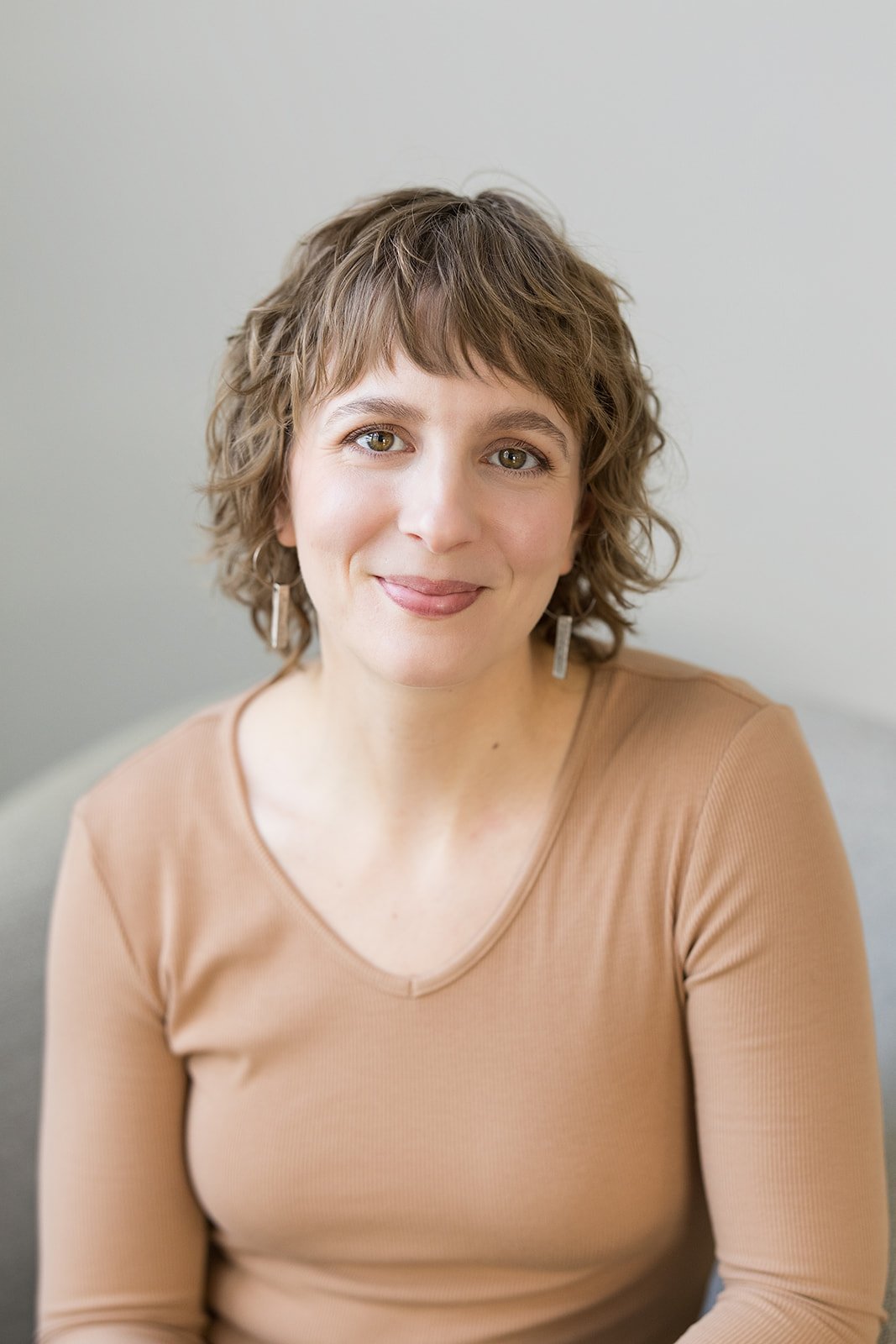
MEET Marissa Kovage, Clinical mental health counselor - White river junction, vermont
Insight may not be the problem
Integration is where the work begins.
My work is grounded in an integrative approach to healing — one that pays close attention to how experiences are held and lived in the body, not just how they make sense intellectually.
I practice EMDR therapy in a way that integrates nervous system work, emotional experience, and relational awareness. I also incorporate a parts-aware approach, helping different aspects of you feel seen, understood, and included in the process rather than pushed aside or overridden.
My work is polyvagal-informed, meaning I pay close attention to cues of safety, regulation, and nervous system response as we move through the work together. This allows us to engage with difficult material in a way that feels steady, responsive, and respectful of your system’s capacity.
you’re in the right place.

My approach
working at the level where patterns are held.
Many people I work with have spent a long time trying to understand themselves. Others arrive knowing something doesn’t feel settled yet, even if they can’t fully explain why. In both cases, the work isn’t about trying harder or gaining more insight — it’s about integration.
EMDR allows us to work at the level where patterns are actually held, supporting the nervous system’s natural capacity to process and integrate experiences. As this happens, emotional responses often soften and a greater sense of steadiness can emerge.
Sessions are collaborative and carefully paced, with attention to choice, consent, and timing. When it feels meaningful, I’m also open to exploring ancestral, cultural, or spiritual dimensions of experience — always client-led and approached with care and respect.
“
While trauma occurs in separation, healing happens in relation.
Thomas Hübl
Why this work matters to me…
nothing is broken here.
Over time, I’ve seen how often people assume that if change hasn’t happened, something must be wrong with them. Many people arrive carrying that belief quietly, even after years of effort and reflection.
what allows change.
In my experience, what’s usually missing isn’t motivation, insight, or effort — it’s support for healing at the level where experiences are actually held. When the nervous system is included and different parts of a person are given space, change doesn’t need to be forced. It can begin to unfold naturally.
the work I’m devoted to.
This understanding is what guides my work. I’m committed to therapy that is integrative, relational, and deeply human — work that allows understanding to settle into something that can be felt, lived, and carried forward with more ease.


My background
The foundations beneath this work.
-
Primary approaches include:
EMDR therapy
Polyvagal-informed nervous system work
Parts-aware / IFS-informed therapy
Nature-based therapy
My work is also informed by:
Attachment theory
Grief and loss work
Intergenerational and ancestral healing
-
Clinical Mental Health Counselor, Vermont Allied Mental Health Practitioner #097.0136200
Masters of Science, Clinical Mental Health Counseling, Prescott College
Education Specialist, Experiential Counseling, concentration in Nature-Based Counseling, Prescott College
Bachelors of Science, Conservation Biology, SUNY College of Environmental Science and Forestry
-
50-hour EMDR Therapist Training, CompassionWorks
Therapeutic Fly-Fishing with EMDR (TF-EMDR)® Therapist, Seiyu Institute
Polyvagal Informed EMDR Practitioner Program, Trauma Therapist Institute*
EMDR Approaches to Intergenerational and Ancestral Trauma, Trauma Therapist Institute
EMDR for Grief and Loss, Trauma Therapist Institute
EMDR Intensives Training, Scaling Up
EMDR GAP Training, Scaling Up
*indicates that I am currently enrolled or participating in these programs

If this way of working resonates,
I invite you to begin.
The next step is to schedule a consultation call. This is a brief conversation to connect,
answer any initial questions, and note anything important you’d like me to know.
From there, we’ll schedule an initial session to explore your experience
more fully and see if working together feels like a good fit.